

What is Rent-to-Sell?
The short version: your tenant is also your eventual buyer. They sign a lease of up to eight years, pay market rent plus a fixed weekly contribution on top, and hold an option to buy the place from you somewhere between year four and year eight. If you've gone looking for rent-to-own for landlords or vendor finance for investors, this is that idea done properly — through a licensed agency, on a written contract, with a manager looking after it.
You keep the title. You keep the mortgage. You keep the growth. What changes is the cashflow — up by half of the first year's rent, every week — and the exit, which stops being "whenever I get around to it" and becomes a window with a floor price under it. PublicSquare manages the property for the whole term and handles the sale at the end.
What changes when you switch from a traditional lease
Side by side, this is what actually changes — from the money that lands each week through to the day the property sells.
| Trad. Lease | Rent-to-Sell | |
|---|---|---|
| Weekly cashflow | Market rent | Market rent + 50% of year-one rent, fixed for up to 8 years |
| Rent reviews | Market, at each renewal | Reviewed annually, lifted by up to 4% |
| Tenant | Re-let at the end of each term | One tenant, contracted for up to 8 years |
| Vacancy between tenancies | Your cost, each turnover | No planned turnover during the term |
| Tenant replacement | Re-letting fee each time | Free, on a new Rent-to-Sell term |
| Management | Your agent | PublicSquare, unless otherwise agreed |
| When you exit | Whenever you decide to list | The tenant's window, years 4 to 8 |
| Sale price | Whatever the market pays | The higher of the contracted floor or an independent valuation |
| Trad. Lease | Rent-to-Sell | |
|---|---|---|
| Weekly cashflow | Market rent | Market rent + 50% of year-one rent, fixed for up to 8 years |
| Rent reviews | Market, at each renewal | Reviewed annually, lifted by up to 4% |
| Tenant | Re-let at the end of each term | One tenant, contracted for up to 8 years |
| Vacancy between tenancies | Your cost, each turnover | No planned turnover during the term |
| Tenant replacement | Re-letting fee each time | Free, on a new Rent-to-Sell term |
| Management | Your agent | PublicSquare, unless otherwise agreed |
| When you exit | Whenever you decide to list | The tenant's window, years 4 to 8 |
| Sale price | Whatever the market pays | The higher of the contracted floor or an independent valuation |
What happens at the end of the term
If the tenant buys, the sale price is the higher of the contracted minimum or an independent valuation, so a fall in the market does not by itself reduce your resale price, and the upside is not capped. The tenant's accumulated contributions are credited towards the purchase price as their deposit.
If the tenant does not buy, you repay their accumulated contributions and keep the property, or sell it on the open market. The contracted minimum still applies under the agreement, and any shortfall between the sale price and that minimum is deducted from the tenant's deposit to make you whole.
Either way, the property remains yours. Title stays in your name for the whole term and the property is sold from your name. Your mortgage is unaffected, and replacing one first mortgage with another is expressly contemplated in the agreement.
Market rent plus 50%: what it earns
The mechanism is simple. Your tenant pays the market rent, and on top of it a fixed weekly contribution equal to half of the first year's rent. Not sure what your property's market rent is? Start with our rental appraisal guide. That contribution never moves for the whole term; the rent underneath it is reviewed each year and can rise by up to 4%. So a property collecting $700 a week today collects $1,050 under Rent-to-Sell — $18,200 more in the first year, and $145,600 more over eight, before you count a single rent increase.
- $500/wk$750/wk
- $600/wk$900/wk
- $700/wk$1,050/wk
- $800/wk$1,200/wk
- $900/wk$1,350/wk
- $1,000/wk$1,500/wk
| Rent you collect now | Tenant's contribution | Total each week | Extra in year one | Extra over 8 years |
|---|---|---|---|---|
| $500/wk | $250/wk | $750/wk | $13,000 | $104,000 |
| $600/wk | $300/wk | $900/wk | $15,600 | $124,800 |
| $700/wk | $350/wk | $1,050/wk | $18,200 | $145,600 |
| $800/wk | $400/wk | $1,200/wk | $20,800 | $166,400 |
| $900/wk | $450/wk | $1,350/wk | $23,400 | $187,200 |
| $1,000/wk | $500/wk | $1,500/wk | $26,000 | $208,000 |
Run the $700-a-week example out to eight years and a normal lease brings in $291,200; Rent-to-Sell brings in $436,800. We've held the rent flat on both sides on purpose, so the gap you're looking at is the contribution written into the contract — not a guess about where rents go. To run your own rent, use the weekly cashflow calculator.
See how much your property could be earning100% online · No agent visit · No obligation
A defined exit: the contracted minimum resale price
This is the part that usually gets landlords' attention. Every contract sets a minimum resale price, worked out by growing today's value at a floor rate each year. The earlier the tenant buys, the higher the rate they buy at. When the sale happens, you get the higher of that floor or an independent valuation. It's a term of the contract — not a forecast, and not a promise of profit — but it does mean the sale can't complete below it.
Here is how that plays out on the $800,000 property we use throughout this article — the same one behind the $700-a-week rent above and the sell-now comparison further down. Each figure is the contracted floor for that exit year; if an independent valuation on the day comes in higher, the higher number is the price.
| Exit year | Floor rate | Resale price |
|---|---|---|
| Year 4 | 8% p.a. | $1,007,770 or valuation if higher |
| Year 5 | 7% p.a. | $1,048,637 or valuation if higher |
| Year 6 | 6% p.a. | $1,070,580 or valuation if higher |
| Year 7 · expected | 5% p.a. | $1,072,077 or valuation if higher |
| Year 8 | 4% p.a. | $1,052,745 or valuation if higher |
| Exit year | Floor rate | Resale price |
|---|---|---|
| Year 4 | 8% p.a. | $1,007,770 or valuation if higher |
| Year 5 | 7% p.a. | $1,048,637 or valuation if higher |
| Year 6 | 6% p.a. | $1,070,580 or valuation if higher |
| Year 7 · expected | 5% p.a. | $1,072,077 or valuation if higher |
| Year 8 | 4% p.a. | $1,052,745 or valuation if higher |
To see the floor for any price and exit year, use the minimum resale price calculator. These rates apply to houses. Apartments and townhouses typically grow more slowly, so PublicSquare may set lower minimum growth rates in the contract for those properties, with the agreement of all parties.
The tenant holds an option to buy between year four and year eight. An option, not an obligation — but for once the end of the hold has a shape you can plan around instead of a question mark. There are earlier exit routes in the contract too; ask us and we'll walk you through them.
What landlords also get
- A pre-qualified, committed tenant — assessed for mortgage readiness and working towards owning the place, not renting until something better comes along.
- Reduced turnover — one tenant on a lease of up to eight years instead of a re-let at the end of every term.
- Free tenant replacement — if a tenant ever needs replacing we find the next one at no charge, on a new Rent-to-Sell term.
- Annual rent increases — your property manager appraises and reviews the rental portion every year, lifting it by up to 4%.
- Your title, your lender — individual, company, trust or SMSF ownership is unchanged, and you can refinance freely throughout.
- Managed end to end — unless otherwise agreed, PublicSquare is your licensed property manager for the term, and it handles the resale, at a flat fee comparable to a traditional agency.
See how much your property could be earning100% online · No agent visit · No obligation
Rent-to-Sell case studies: real properties, real numbers
Everything above comes from properties we've published as case studies on publicsquare.com.au — Queensland homes across Townsville, Ipswich, Moreton Bay, Logan and Cairns. Rent and the weekly total are first-year figures; the contribution is fixed for the whole term.
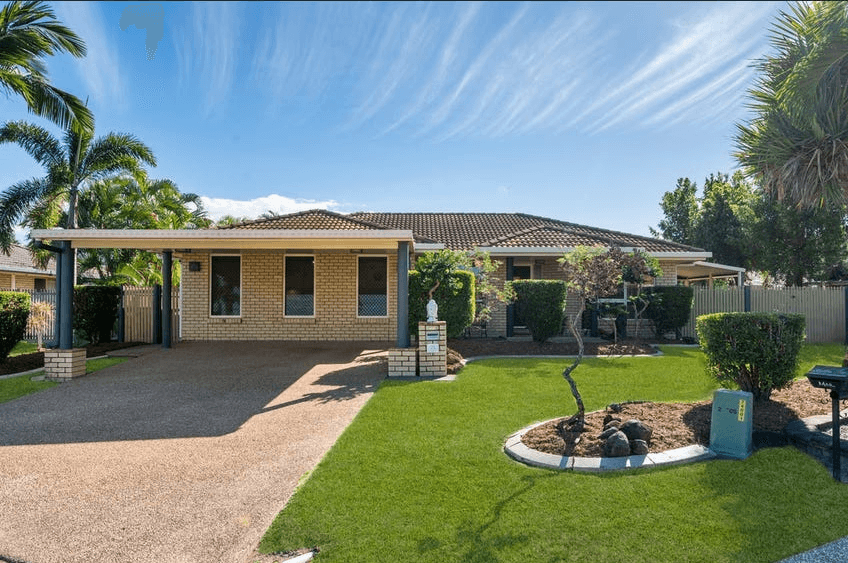 Townsville, QLD$975
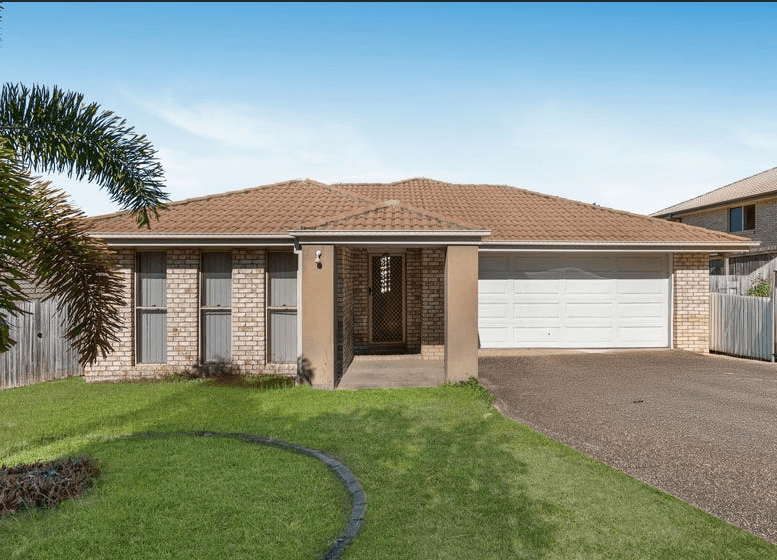 Ipswich, QLD$975
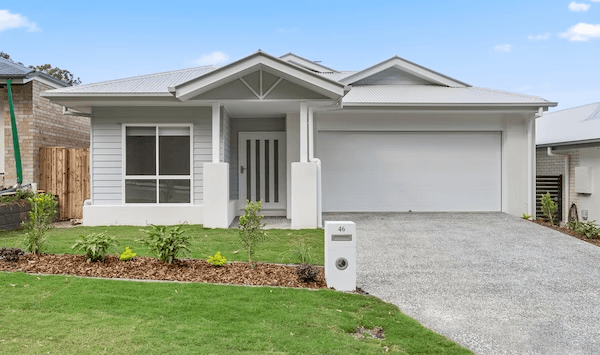 Moreton Bay, QLD$1,020
.jpg?width=240) Townsville, QLD$1,125
Townsville, QLD$1,125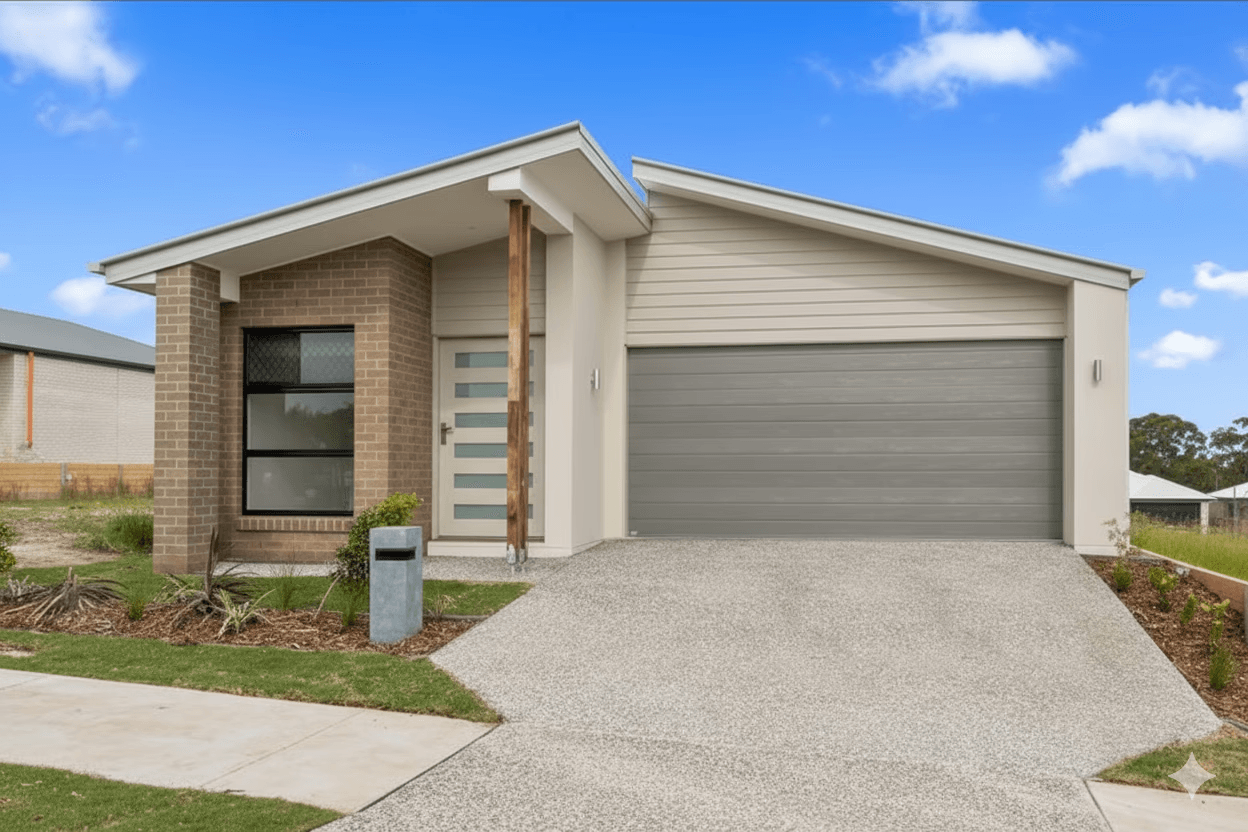 Logan, QLD$945
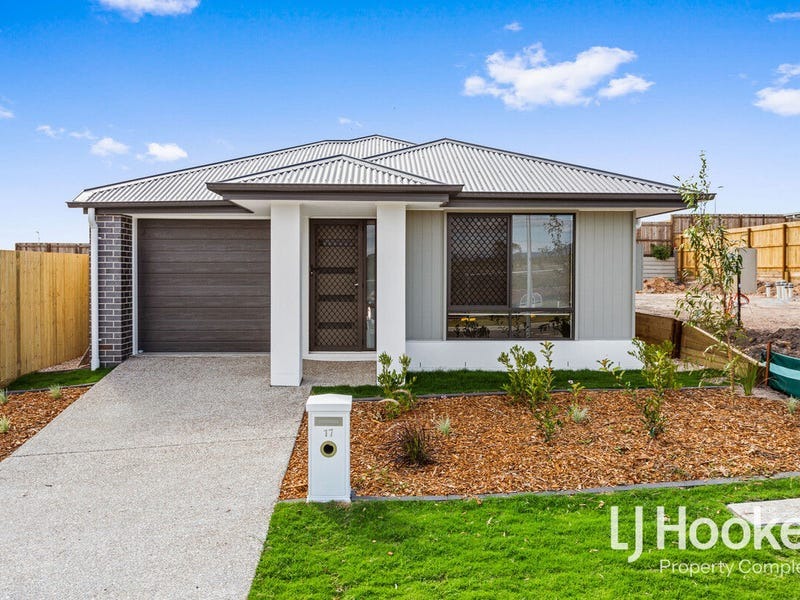 Logan, QLD$1,020
 Cairns, QLD$1,110
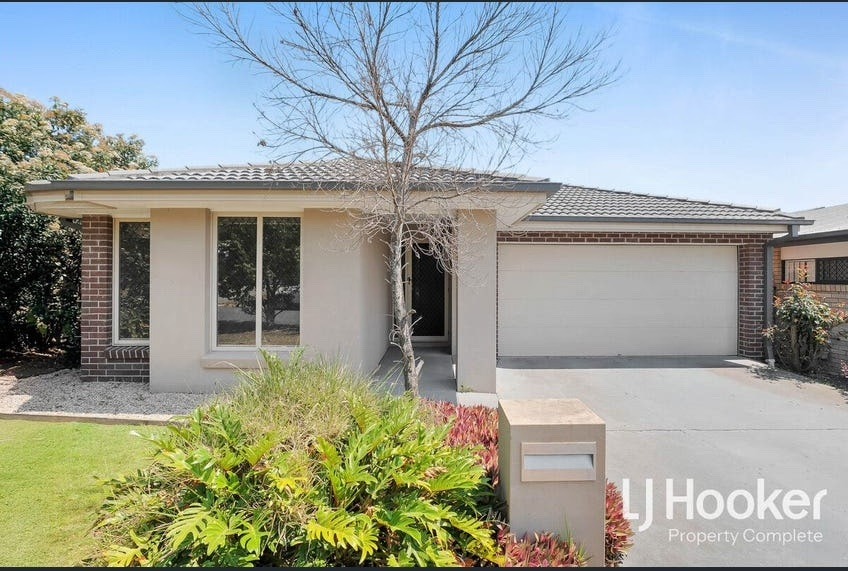 Logan, QLD$1,140
 Ipswich, QLD$1,125
 Ipswich, QLD$1,170
- Average$1,061
| Market | Type | Market rent | Contribution | Total weekly | |
|---|---|---|---|---|---|
| Townsville, QLD | Established | $650 | $325 | $975 |
| Ipswich, QLD | Established | $650 | $325 | $975 |
| Moreton Bay, QLD | New build | $680 | $340 | $1,020 |
| Townsville, QLD | Established | $750 | $375 | $1,125 |
| Logan, QLD | Established | $630 | $315 | $945 |
| Logan, QLD | Established | $680 | $340 | $1,020 |
| Cairns, QLD | Established | $740 | $370 | $1,110 |
| Logan, QLD | Established | $760 | $380 | $1,140 |
| Ipswich, QLD | New build | $750 | $375 | $1,125 |
| Ipswich, QLD | Established | $780 | $390 | $1,170 |
| Average | $707 | $354 | $1,061 |
Rent-to-Sell versus selling now
A lot of landlords who talk to us are really asking a different question: should I just sell? Fair question. Selling today means taking today's price and walking away from the rent and the growth that come with holding. Holding under Rent-to-Sell keeps the money coming in while you keep your seat for whatever the property is worth at the end. Here's the same $800,000 property, let at $700 a week, with the sale landing in year seven — the year we expect most Rent-to-Sell tenants to buy. The three right-hand columns are that anticipated seven-year sale under different growth assumptions.
- Sale price$1,267,911
- Tenant's contributions, credited at settlement−$127,400
- Rent and contributions collected along the way+$382,200
- Projected holding costs over the term−$75,040
- Projected finance costs, interest only−$254,800
- Total to you$1,192,871
- Difference against selling today+$392,871
| Sell today | Year 7 · contractual minimum (5% floor) | Year 7 · average growth (6.8% p.a.) | Year 7 · high growth (8.5% p.a.) | |
|---|---|---|---|---|
| Sale price | $800,000 | $1,072,077 | $1,267,911 | $1,416,114 |
| Tenant's contributions, credited at settlement | — | −$127,400 | −$127,400 | −$127,400 |
| Rent and contributions collected along the way | — | +$382,200 | +$382,200 | +$382,200 |
| Projected holding costs over the term | — | −$75,040 | −$75,040 | −$75,040 |
| Projected finance costs, interest only | — | −$254,800 | −$254,800 | −$254,800 |
| Total to you | $800,000 | $997,037 | $1,192,871 | $1,341,074 |
| Difference against selling today | — | +$197,037 | +$392,871 | +$541,074 |
Selling today puts $800,000 in your hands and ends the story there. Holding under Rent-to-Sell means waiting until the anticipated year-seven sale, but banking about $7,480 a year after the costs above while you wait, and keeping the upside. "Average growth" is the national 30-year house average to 2018 (CoreLogic), before COVID; "high growth" is a better-than-average run. Both sit above the contracted floor, and a higher valuation on the day is the price you get. None of it is a forecast for your street — it's the shape of the decision.
See how much your property could be earning100% online · No agent visit · No obligation
Why Rent-to-Sell might not be right for you
Rent-to-Sell adds a lot of cashflow. It is not free of trade-offs, and you should know them before you sign anything. These are the four that matter.
1. The contributions reduce what is paid at settlement
The extra you receive each week isn't a bonus on top of the sale price. When the tenant buys, those contributions are credited towards their purchase, so they pay that much less at settlement. Think of it as receiving part of the sale price early, week by week. That's a real cashflow advantage — just don't mistake it for extra growth.
2. Rent increases are capped at 4%
The rent part is reviewed each year and can go up by as much as 4% — roughly what Australian rents did in a normal year before COVID, not what they did in the years after. If market rents run hotter than that, a standard re-let would earn more rent. The contribution doesn't rise either; it's set from the first year's rent and stays there.
3. You sell within the tenant's purchase window
The tenant can buy between year four and year eight, and year seven is where we expect most sales to land. That gives you a defined exit, but less freedom than a normal lease if you decide in year two that you want out. There are earlier exit routes in the contract; ask about them before you sign, not after.
4. The tenant may not complete the purchase
We assess every tenant for mortgage readiness, but nobody can promise what a lender will say years from now. If the tenant can't complete, you sell on the open market — at no less than the contracted minimum, or the market price if it's higher — or, if you'd rather keep the property, you and the tenant can agree something else under the contract.
Frequently asked questions
The tenant pays market rent plus a fixed contribution equal to 50% of first-year rent. On $700 a week that is $1,050 a week — $18,200 more in year one and $145,600 over an eight-year term before any rent growth.
Sources
Written by

Property Lead
Licensed agent · Former mortgage broker
I was a mortgage broker before joining PublicSquare, so I look at every property and every purchase the way a lender would. I now lead the property side of the program, helping homebuyers from their first info session through to move-in, and working with our buyers agency team on each acquisition for our investors.
Reviewed by

Founder & CEO
Licensed real estate agent
I started PublicSquare in 2021 to give homebuyers a real path to ownership without a deposit, and investors a stronger-cashflow alternative to a standard rental. I hold real estate licences in Queensland and New South Wales and personally review every property that enters the program.
See how much your property could be earning100% online · No agent visit · No obligation
How this comparison was made
Written by Jarrod Wills (Property Lead) and reviewed for accuracy by Dean Arnold (Founder & CEO) before publishing. Program terms are quoted from PublicSquare's own agreements, and market figures are referenced to the sources listed above. We check it again whenever the numbers change; it was last updated 26 September 2026.
For more information, visit our Editorial Guidelines.
Read more about Rent-to-Sell.
This article is general information only and does not take your personal circumstances into account. PublicSquare is a licensed real estate agency, not a financial adviser or credit provider. Consider seeking independent advice before making a decision.

.png)







.jpg)