What is a rent-to-buy scheme?
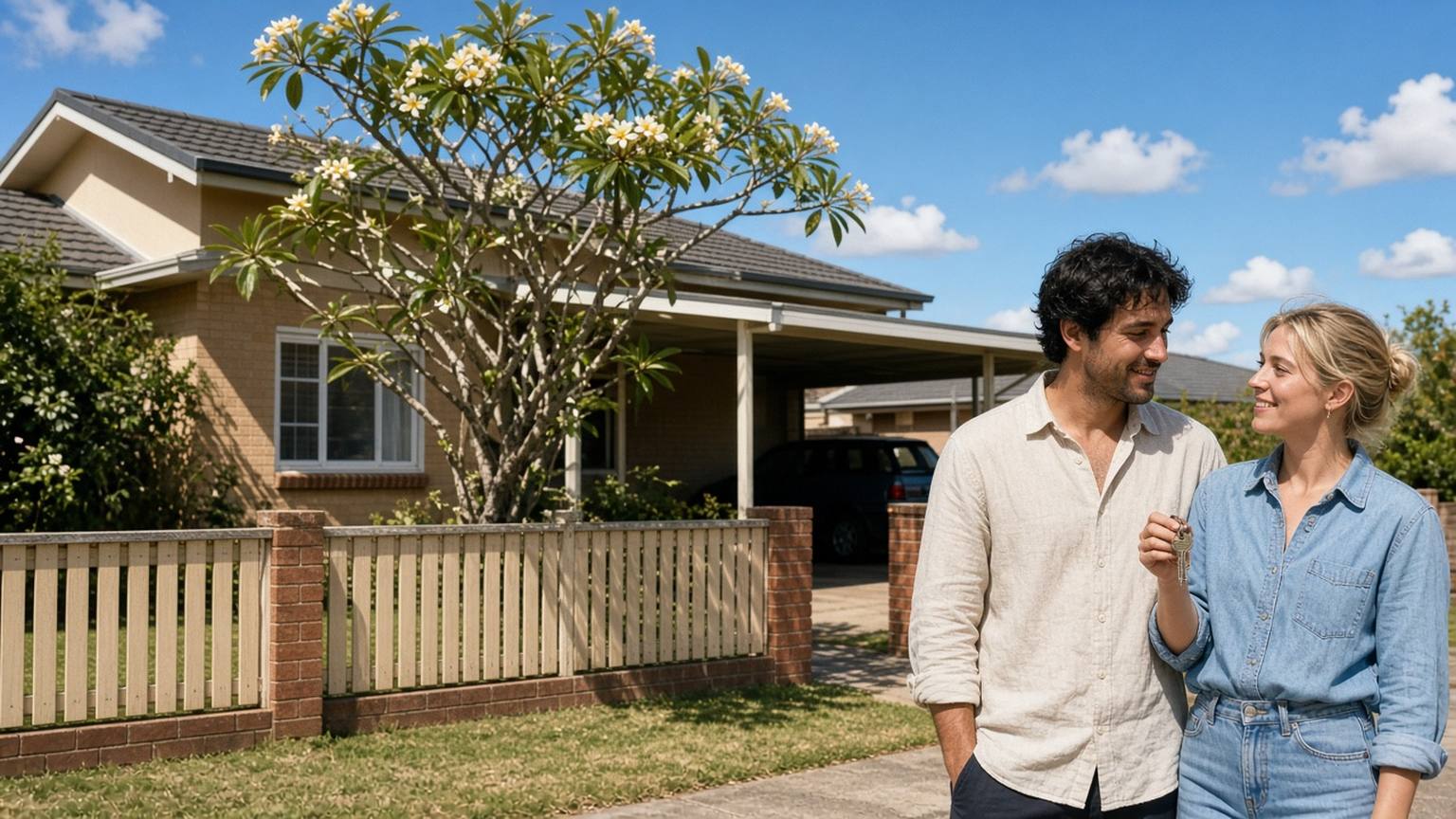
A rent-to-buy scheme lets you rent a home with the right to buy it later. Part of what you pay, or what you save while renting, goes towards your deposit, and you switch to a mortgage when you are ready. Government schemes and private rent-to-own homes both use this idea, but the rules, costs and protections are very different.
Most rent-to-buy arrangements combine a residential lease with an option to buy: a right, but not an obligation, to purchase the home at a price or price formula agreed at the start. They are different from vendor finance, where you agree to buy the home now and pay the seller in instalments.
Is there a government rent-to-buy scheme in Australia?
Yes, in South Australia. Rent to Own, run through HomeSeeker SA and the SA Housing Trust, is the only government rent-to-buy scheme we found that is open to private renters. Western Australia's government options, through Keystart, are low-deposit and shared ownership home loans rather than rent-to-own. The other state programs are for people already living in public or social housing.
South Australia's Rent to Own
It grew out of the SA Housing Trust's Rent to Buy pilot of 125 homes. The government has committed to up to 2,000 purpose-built Rent to Own homes, and you register your interest to be invited to apply as new projects are released.
- Rent: 75% of the market rate, so you can save the difference towards your deposit.
- Price: locked in when you sign the lease and sale agreement, so it does not change while you prepare to buy.
- Timing: applicants are pre-qualified on their capacity to buy the home at the end of a two-year lease.
- Homes: new, purpose-built homes released project by project.
You may be eligible if you live in South Australia, are an Australian citizen or permanent resident, have a job or run a business, are currently renting, do not own property, will live in the home, and meet HomeSeeker SA's income and asset limits.
Western Australia: Keystart loans, not rent-to-own
WA has no government rent-to-own scheme for private renters. Its help comes through Keystart, the State Government's home lender, which lends with a 2% deposit and no lenders mortgage insurance. You buy the home from day one, so these are low-deposit loans, not rent-to-buy.
- Low Deposit Home Loan: a 2% deposit, a property price limit of $860,000, and income limits of $155,000 for singles or $228,000 for couples and families ($225,000 and $285,000 in the Kimberley and Pilbara).
- Shared Ownership Home Loan: the Housing Authority co-owns part of the home and charges no rent or interest on its share. You pay all rates, insurance, strata levies and maintenance, and can buy more shares when you can afford to. Price limit $720,000; income limits $128,000 for singles and $197,000 for couples and families. It is the closest WA option to rent-to-own, but you own your share from day one.
- Urban Connect Shared Equity Home Loan: for new apartments, townhouses, villas and small-lot new builds up to $800,000. The Housing Authority contributes up to $250,000 towards the price, with the same income limits as Shared Ownership.
- Jalbi Jiya (Broome): a $9.7 million government-funded program run by Nyamba Buru Yawuru, with 25 homes for working Aboriginal families who rent long-term with support towards buying. It is a genuine rent-then-buy pathway, but it is local, all homes are allocated, and it is not open to the general public.
Keystart limits as announced on 15 April 2026. Check keystart.com.au for current settings before you apply.
- Low Deposit Home LoanNo: a home loan; you own the home from day one
- Shared Ownership Home LoanNo: shared ownership, the closest WA option; no rent or interest on the government's share
- Urban Connect Shared Equity Home LoanNo: shared equity on new homes; government contributes up to $250,000
- Jalbi Jiya (Broome)Yes: rent then buy, but local (Broome) and fully allocated
| WA program | Is it rent-to-own? | Deposit | Price limit |
|---|---|---|---|
| Low Deposit Home Loan | No: a home loan; you own the home from day one | 2% | $860,000 |
| Shared Ownership Home Loan | No: shared ownership, the closest WA option; no rent or interest on the government's share | 2% | $720,000 |
| Urban Connect Shared Equity Home Loan | No: shared equity on new homes; government contributes up to $250,000 | 2% | $800,000 |
| Jalbi Jiya (Broome) | Yes: rent then buy, but local (Broome) and fully allocated | Not published | Not published |
Buying your Department of Housing home: options for public housing tenants
Other states help existing social housing tenants buy the home they live in, rather than offering rent-to-buy to the wider public:
- Queensland: public housing tenants may be able to buy their home with a Queensland State Housing Loan (minimum deposit $2,000, household income up to $141,000) or a shared equity loan for 60% or more of it. On Palm Island, a rent-to-buy scheme will let residents buy up to 300 council-owned social homes.
- New South Wales: eligible tenants can apply to buy their Homes NSW social house at market value. Homes NSW states that rent-to-buy and shared equity arrangements are not available under that policy.
- ACT: Housing ACT offers sale-to-tenant and shared equity options to eligible public housing tenants.
- Western Australia: under the Rental Sales Scheme, eligible Department of Housing and Works tenants can apply to buy their public housing home, with finance pre-approval from a bank or Keystart.
Are Help to Buy and the 5% Deposit Scheme rent-to-buy schemes?
No. Both help you buy a home on day one with a smaller deposit and a home loan from a participating lender. You never rent the home first, so you need the deposit, stamp duty and buying costs in cash at the start.
- SA Rent to OwnNone to move in; save while renting
- Help to BuyAt least 2%
- 5% Deposit Scheme5% (2% for single parents)
- PublicSquare Rent-to-OwnNo deposit; limited additional costs
| How you get in | Deposit at the start | Who owns the home | Where | |
|---|---|---|---|---|
| SA Rent to Own | Rent at 75% of market rate, then buy | None to move in; save while renting | SA Housing Trust until you buy | South Australia |
| Help to Buy | Buy now with a shared equity loan | At least 2% | You, with the government owning up to 30% (existing) or 40% (new) | All states and territories |
| 5% Deposit Scheme | Buy now with a guaranteed loan | 5% (2% for single parents) | You | All states and territories |
| PublicSquare Rent-to-Own | Rent with an option to buy | No deposit; limited additional costs | An investor until you buy | States including Queensland and New South Wales |
Help to Buy is a shared equity scheme: the government owns a big chunk of your house and shares in its growth. It has 10,000 places a year and income limits of $103,000, or $165,000 for joint applicants and single parents. The 5% Deposit Scheme has no income caps or limit on places, but the home must sit under a price cap for its area. For upfront costs side by side, see How to Buy a Home With No Deposit in Australia.
How do private rent-to-buy homes work?
A private owner or investor holds the home, you lease it, and you hold an option to buy it later. On top of rent you usually pay an option fee or a contribution, which is meant to become your deposit. Everything else depends on the contract, so two private programs can look nothing alike.
The details to compare between providers:
- The weekly payment: market rent plus a contribution, or a single higher payment with no clear split.
- The purchase price: fixed at the start, set by a growth formula, or the market value when you buy.
- Where your money goes: credited to you as a deposit, held in trust, or kept by the owner if you don't buy.
- Who pays rates, insurance and maintenance during the lease.
- What happens if you can't get a mortgage when the option opens.
Legal Aid NSW and the Consumer Action Law Centre warn that some rent-to-buy and vendor terms deals charge above-market payments, leave buyers paying rates and repairs on a home they don't own, and keep everything paid if the buyer can't complete.
PublicSquare's Rent-to-Own program
An investor buys or holds the home you choose in a state where the program operates, such as Queensland or New South Wales, and you move in as the tenant with a Call Option Deed. You pay market rent plus a fixed contribution equal to 50% of your first-year rent, and at any time in years 4 to 8 you can switch to a mortgage and buy the home. For every step, read How Rent-to-Own Works in Australia.
- Rent is reviewed once a year, with increases capped at 4% or the legal maximum, whichever is lower.
- The owner pays rates, insurance, maintenance and utilities during the lease, so you don't pay utility bills.
- Your price is the higher of a contracted minimum or an independent valuation. The minimum grows by 8% a year if you buy in year 4, stepping down to 4% a year in year 8. These rates apply to houses; apartments may have lower rates in the contract.
- If you can't get finance in years 4 to 8, the Owner's Sell-Back Guarantee lets you request an open-market sale and receive your contributions back, less any shortfall and a fixed $3,300 marketing cost.
Government vs private rent-to-buy: what is the difference?
The government scheme gives you cheaper rent for a short time on a new home, and you build the deposit yourself. A private program like PublicSquare's gives you a longer runway and builds the deposit for you through a fixed contribution, in exchange for a higher weekly payment.
- Weekly paymentMarket rent plus a fixed contribution on top (50% of year-one rent); utilities paid by the owner
- How the deposit buildsThe contribution is credited to you as your deposit when you buy
- When you buyAny time in years 4 to 8
- Purchase priceHigher of a contracted minimum or a valuation
- Choice of homeHomes you choose, within approved buying power
- Who can applyApplicants under 50 in eligible states such as QLD and NSW, assessed on a soft-check pre-approval
- PlacesNot capped
| SA Rent to Own | PublicSquare Rent-to-Own | Typical private deal | |
|---|---|---|---|
| Weekly payment | 75% of market rent | Market rent plus a fixed contribution on top (50% of year-one rent); utilities paid by the owner | Often above market rent, or rent plus an option fee |
| How the deposit builds | You save the 25% discount yourself | The contribution is credited to you as your deposit when you buy | Varies; often lost if you don't complete |
| When you buy | After a two-year lease | Any time in years 4 to 8 | Set by the contract |
| Purchase price | Locked in when you sign | Higher of a contracted minimum or a valuation | Fixed, formula or market value |
| Choice of home | New homes released by project | Homes you choose, within approved buying power | The seller's home |
| Who can apply | SA renters within HomeSeeker SA income and asset limits | Applicants under 50 in eligible states such as QLD and NSW, assessed on a soft-check pre-approval | Varies |
| Places | Up to 2,000 homes over coming years | Not capped | Not capped |
What does each option cost?
Here is how the deposit builds under each model, using example rents. Your own figures will depend on the home and the rent.
SA Rent to Own: on a home with a market rent of $550 a week, you would pay $412.50, keeping $137.50 a week. Banked every week, that is $14,300 after two years. You then need a home loan for the rest of the locked-in price.
PublicSquare Rent-to-Own: on a $750,000 home you pay $650 a week rent plus a $325 a week contribution on top, and utilities stay with the owner. By the end of year 6 the contribution has built $101,400, about 10.1% of the contracted minimum price. Use the Deposit Builder calculator to see your own numbers.
Upfront, PublicSquare's program has no deposit and limited additional costs: budget $8,000 to $15,000 for fees, legal advice, bond, the first two weeks and moving. The setup fee is 0% on a new home from our building panel. There is no stamp duty or LMI at the start; those costs may apply when you buy.
Is rent-to-buy legal in every state?
The rules differ by state. Victoria has had its own rules for rent-to-buy arrangements on residential land since 1 March 2020. In Queensland and New South Wales, PublicSquare's program runs on standard state tenancy agreements and an option deed.
In Victoria, the rules depend on who offers the arrangement and how it is structured. Arrangements offered by Homes Victoria or a registered housing association are treated differently, and others need to meet specific requirements, such as holding payments in trust and giving buyers a right to cancel with a refund. Consumer Affairs Victoria explains the rules and the penalties that can apply.
Rent-to-own through PublicSquare is available in states including Queensland and New South Wales.
What should you ask any rent-to-buy provider?
- Who owns the home, and is the lease or option registered or protected in any way?
- How is the purchase price set, and can it go up?
- Where does my extra payment go, and do I get it back if I can't get a mortgage?
- Who pays rates, insurance and repairs during the lease?
- What happens if the owner sells or refinances the home?
- When can I buy, and what happens if I am not ready by the end?
- Is the deal legal in my state, and will an independent solicitor review it?
When is a rent-to-buy scheme not the right choice?
Rent-to-buy suits people with steady income who could service a mortgage but don't yet have the deposit. It is the wrong fit if any of these apply:
- You already have a deposit of 5% or more and qualify for a government scheme. Buying now is usually cheaper over time.
- You might move soon. SA's scheme runs two years and PublicSquare's option opens in year 4, so both suit people planning to stay.
- You can't see a path to a mortgage. Every rent-to-buy scheme ends with you borrowing to buy, and no lender's decision can be guaranteed.
- You want the lowest weekly housing cost. A private program costs more each week than renting the same home, because part of each payment builds your deposit.
- The contract is unclear. If you can't tell where your money goes or how the price is set, walk away.
Frequently asked questions
Yes, one rent-to-buy government scheme is open to private renters: South Australia's Rent to Own, run through HomeSeeker SA. Eligible SA renters pay 75% of market rent on a new home, then buy it after two years at a price locked in at the start.
Sources
- 1.HomeSeeker SA — Rent to Own
- 2.SA Government media release (via National Tribune) — Rent-To-Owners set to move into dream homes ($413.5m, 2,000 homes over eight years)
- 3.First Home Buyers (Housing Australia) — Australian Government Help to Buy Scheme
- 4.First Home Buyers (Housing Australia) — Australian Government 5% Deposit Scheme
- 5.Queensland Government — Loan to buy your public housing home
- 6.Queensland Government — Loan to buy a share of your public housing home
- 7.Queensland Department of Housing and Public Works — Remote Home Ownership Program (Palm Island Rent-to-Buy)
- 8.NSW Government — Tenant purchase of a social house
- 9.Consumer Affairs Victoria — High-risk property investments (rent-to-buy schemes)
- 10.Consumer Affairs Victoria — Sale of Land (Exemption) Regulations 2020
- 11.Legal Aid NSW — Thinking of a rent to buy home purchase?
- 12.Consumer Action Law Centre — Vendor terms and rent-to-buy schemes
- 13.Keystart — New product settings (15 April 2026)
- 14.Keystart — Shared Ownership Home Loan
- 15.Keystart — Urban Connect Shared Equity Home Loan
- 16.WA Department of Housing and Works — Home ownership options
- 17.WA Government media statement — More families achieve home ownership through Jalbi Jiya program (December 2024)
- 18.Nyamba Buru Yawuru — Jalbi Jiya Housing Program
Written by

Property Lead
Licensed agent · Former mortgage broker
I was a mortgage broker before joining PublicSquare, so I look at every property and every purchase the way a lender would. I now lead the property side of the program, helping homebuyers from their first info session through to move-in, and working with our buyers agency team on each acquisition for our investors.
Reviewed by

Founder & CEO
Licensed real estate agent
I started PublicSquare in 2021 to give homebuyers a real path to ownership without a deposit, and investors a stronger-cashflow alternative to a standard rental. I hold real estate licences in Queensland and New South Wales and personally review every property that enters the program.
How this guide was made
Written by Jarrod Wills (Property Lead) and reviewed for accuracy by Dean Arnold (Founder & CEO) before publishing. Program terms are quoted from PublicSquare's own agreements, and market figures are referenced to the sources listed above. We check it again whenever the numbers change; it was last updated 11 October 2026.
For more information, visit our Editorial Guidelines.
Read more about Rent-to-Own.
This article is general information only and does not take your personal circumstances into account. PublicSquare is a licensed real estate agency, not a financial adviser or credit provider. Consider seeking independent advice before making a decision.